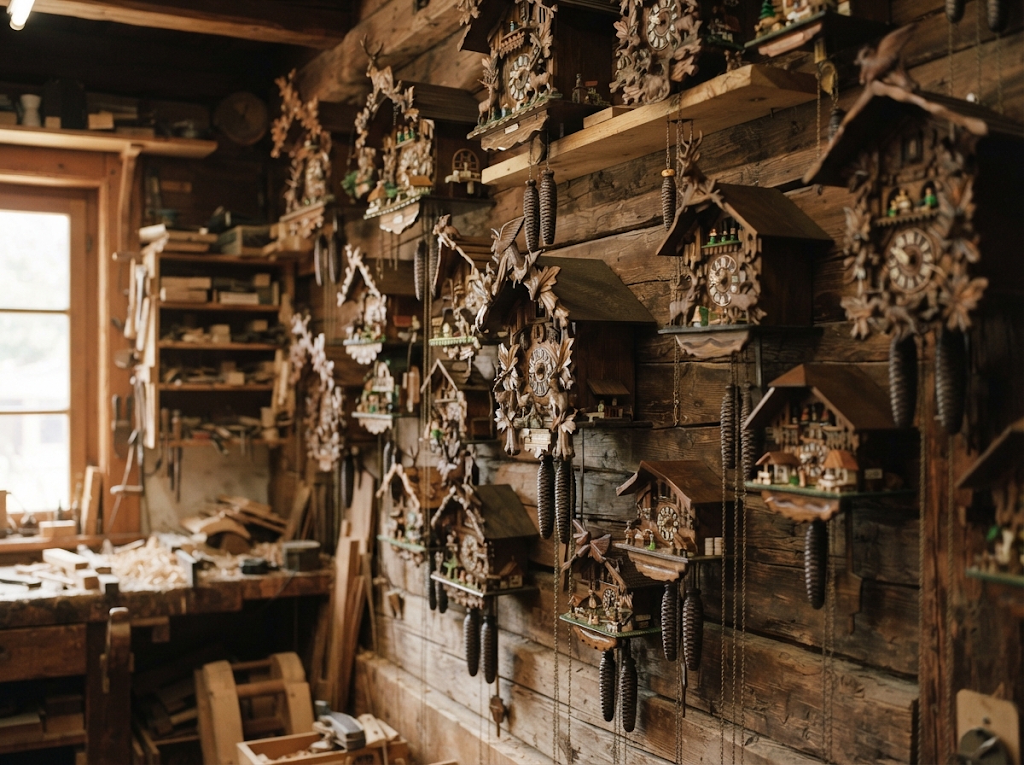
In the Black Forest, the sound of a cuckoo clock is not a souvenir noise but a family trade that goes back to the eighteenth century. Small workshops carve the cases, paint the dials and tune the movements by hand, and many of them now sell to collectors in North America, Britain and Japan. A clock maker can spend three weeks on a single piece, yet lose the sale in three minutes if the customer cannot understand the warranty, the winding instructions or the shipping terms. This article explains how traditional craft businesses in Germany can prepare their English documents so that the quality of the work is matched by the quality of the words around it.
The Story Behind the Product
Collectors do not only buy an object, they buy a story. Where was the clock made, by whom, from which wood, and with which tools? A short English page about the workshop, the family and the method gives buyers a reason to pay more than they would for a factory piece. Keep the tone warm and factual, and avoid long sentences that follow German word order too closely. A native reader should never feel that the text was assembled from a dictionary.
Product Descriptions That Sell
Each clock needs a clear description: dimensions, weight, type of movement, number of weights, material of the case and the kind of sound it produces. German terms such as Kuckucksuhr, Schwarzwalduhr or Gewicht should be explained once and then used consistently. Include a size guide with centimetres and inches, and note whether the clock runs for one day or eight days. Small details like these reduce returns and build trust.
Winding, Hanging and Care Instructions
A clock that stops after two days often leads to an angry email, and the cause is usually a missed step in the setup. Write instructions in short numbered steps, with photographs, and explain how to level the clock, how to adjust the pendulum and how to pull the chains. Add a section on troubleshooting, for example what to do when the cuckoo does not call or the clock runs fast. Plain English works better than technical vocabulary.
Choosing the Right Language Partner
Many workshops are small and have no translator on staff, so they ask a relative or a friend with school English to help. This works for a short email but not for a catalogue, a warranty or a legal notice. A professional provider of english to german translation can also work in the other direction, which is useful when customers write in English and the workshop must understand the questions before answering. Share a glossary of your craft terms, because words for carving techniques and clock parts are rarely found in general dictionaries.
Warranty, Returns and Shipping
International buyers want to know what happens if the clock arrives damaged. State the warranty period, the conditions, the process for claims and the person to contact. Explain who pays for return shipping and how long a refund takes. Customs duties vary by country, so describe in simple language what the buyer may have to pay on arrival. The European Commission provides a helpful overview for exporters at Access2Markets, which can guide your own notes on tariffs and import rules.
Certificates and Origin
Some buyers ask for proof that a clock was really made in the Black Forest. Certificates of origin, craft association membership and quality seals support this claim, and they should be available in English as well as German. For related reading on moving texts between the two languages, see this article on German to English translation, which covers typical pitfalls such as long compound words and formal phrasing.
Workshop Tours and Visitors
Many workshops welcome tourists, and a short guided tour is often the beginning of a sale. Prepare an English script that explains how a clock is made, from the first cut in the wood to the final tuning. Keep it lively, with a few figures and a story or two about the family. Signs in the shop should name the main tools and materials, and a price list in English avoids awkward moments at the till.
Online Shops and Marketplaces
If you sell through your own website or a large marketplace, keep the English text consistent across every page. Use the same product names, the same size units and the same delivery times. Search engines and buyers both reward clarity. Write titles that include the type of clock and the main material, and place the best photographs first. Reply to customer questions within one working day, in clear and friendly English.
Newsletters and Social Media
Collectors like to follow the work in progress. A monthly newsletter with a photograph of a new carving, a short note about the wood and a date for the next release keeps the relationship alive. On social media, short captions in English with the German name of the technique in brackets create a sense of authenticity without confusing the reader.
Keeping Quality Over the Years
A craft business lasts when its documents are kept in order. Save the approved English versions of every description, manual, warranty and contract in one folder, with the date of the last review. When a model changes, update the text the same day. A customer who finds the same careful voice in the clock, the manual and the email will remember the workshop for decades, and will probably return when a new generation of collectors begins to look for a clock of their own.